
The Unmistakable Call of the Indian Himalayas
For centuries, the Indian Himalayas have been a sanctuary for sages and seekers, a place where spirituality is woven into the very fabric of the landscape. That ancient reverence has now transformed into a modern call to adventure, drawing people who seek not just stunning views but a deeper connection with themselves. The mountains offer an incredible spectrum of experiences. You can find yourself walking through lush green valleys one week and navigating a stark, high-altitude desert the next. From the gentle slopes of its bugyals to challenging high-altitude passes, the range of Uttarakhand treks offers something for everyone. These diverse Himalayan trekking routes cater to every level of fitness and ambition. This curated list presents ten essential journeys, designed to guide both new trekkers and seasoned mountaineers toward their next great Himalayan story.
Ten Trails That Define Himalayan Adventure
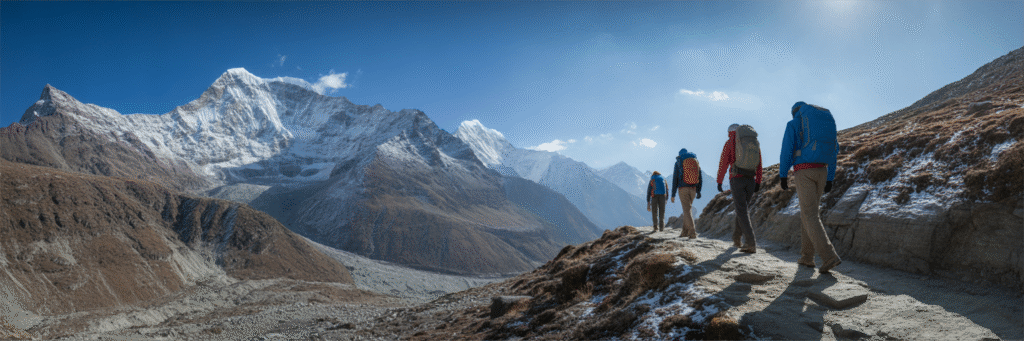
Choosing a trek can feel overwhelming, but certain trails capture the essence of adventure trekking in Himalayas. Each of the following journeys offers a unique narrative, a distinct challenge, and a reward that stays with you long after you’ve returned to the plains. These are some of the best Indian treks that define the spirit of mountain exploration.
1. Rupin Pass Trek
This trek is a story told in changing landscapes. Starting from the sleepy village of Dhaula in Uttarakhand, the trail follows the Rupin river through dense forests and charming hamlets before ascending to the dramatic three-stage Rupin Pass. The final gully crossing is a thrilling, near-vertical climb on snow that tests your resolve and rewards you with breathtaking views of the Kinnaur Kailash range.
- State: Uttarakhand & Himachal Pradesh
- Difficulty: Difficult
- Best Season: May-June, September-October
2. Roopkund Trek
Known for the mysterious human skeletons found at its glacial lake, Roopkund is more than just a historical puzzle. The trail takes you through pristine forests, the sprawling alpine meadows of Ali and Bedni Bugyal, and the challenging final ascent to the lake at nearly 16,000 feet. The Roopkund trek remains one of the most sought-after high-altitude trails in India, as highlighted by trekking authorities like Indiahikes, due to its blend of stunning meadows and historical mystery.
- State: Uttarakhand
- Difficulty: Moderate-Difficult
- Best Season: May-June, August-September
3. Panch Kedar Trek
This is a pilgrimage deep into the heart of Garhwal’s spiritual landscape, connecting five sacred shrines of Lord Shiva. It’s a demanding journey that takes you through remote villages and ancient forests, offering a profound cultural immersion alongside the physical challenge. The trail connects Kedarnath, Madhyamaheshwar, Tungnath, Rudranath, and Kalpeshwar, each with its own unique legend and setting.
- State: Uttarakhand
- Difficulty: Difficult
- Best Season: May-June, September-October
4. Sandakphu Phalut Trek
From this trail in West Bengal, you get a view that few other treks can offer: a panoramic vista of four of the world’s five highest peaks, including Everest and Kanchenjunga. The sight of the “Sleeping Buddha” formation at sunrise is an unforgettable experience. The trail meanders along the India-Nepal border, passing through rhododendron forests that burst into colour in spring.
- State: West Bengal
- Difficulty: Moderate
- Best Season: March-May, October-December
5. Goechala Trek
For those venturing into the eastern Himalayas, the Goechala trek in Sikkim is an unparalleled journey into the heart of the Kanchenjunga National Park. The trail offers jaw-droppingly close views of the mighty Kanchenjunga, the third-highest peak in the world. Walking through vibrant rhododendron forests with the massive peak as a constant companion is a humbling experience.
- State: Sikkim
- Difficulty: Difficult
- Best Season: April-May, September-November
6. Hampta Pass Trek
This classic trek in Himachal Pradesh offers a dramatic crossover from the lush green Kullu valley to the barren, high-altitude desert of Lahaul. The contrast is startling and beautiful. One day you are walking beside gushing streams and flowering meadows, and the next you are surrounded by a stark, rocky landscape, with the beautiful Chandratal Lake as a final reward.
- State: Himachal Pradesh
- Difficulty: Moderate
- Best Season: June-September
7. Valley of Flowers Trek
A UNESCO World Heritage Site, this trail is a vibrant spectacle during the monsoon. The valley transforms into a carpet of countless alpine flowers, creating a scene straight out of a fairytale. It’s a relatively gentle trek, making it accessible for beginners and families, and is often combined with a visit to the sacred Sikh shrine of Hemkund Sahib.
- State: Uttarakhand
- Difficulty: Easy-Moderate
- Best Season: July-August
8. Kedarkantha Trek
If you dream of a winter wonderland, Kedarkantha is your answer. Famous for its heavy winter snowfall, the trail leads to a summit that offers a stunning 360-degree view of snow-capped peaks. The experience of camping in the snow, with clear starry nights and crisp mountain air, makes it one of the most popular winter treks in India.
- State: Uttarakhand
- Difficulty: Easy-Moderate
- Best Season: December-April (Winter)
9. Markha Valley Trek
Often called the ‘tea house trek’ of Ladakh, this trail offers a glimpse into the unique culture of the region. You walk through a starkly beautiful desert landscape, crossing rivers, passing ancient monasteries, and staying in local homestays. The trek provides a perfect blend of natural beauty and cultural immersion, set against the backdrop of the Zanskar and Ladakh ranges.
- State: Ladakh
- Difficulty: Moderate
- Best Season: June-September
10. Chadar Trek
This is not just a trek; it’s an expedition. The Chadar Trek involves walking on the frozen Zanskar River in the dead of winter, when temperatures can plummet to -30°C. It is one of the most challenging and unique top Himalayan treks in the world, demanding immense physical and mental fortitude. The reward is an otherworldly experience of walking through a frozen canyon with towering cliffs on either side.
- State: Ladakh
- Difficulty: Very Difficult
- Best Season: January-February (Winter)
Quick Comparison of Top Himalayan Treks
| Trek Name | State | Best Season | Difficulty Level | Approx. Duration |
|---|---|---|---|---|
| Rupin Pass Trek | Uttarakhand/Himachal | May-Jun, Sep-Oct | Difficult | 8 Days |
| Roopkund Trek | Uttarakhand | May-Jun, Aug-Sep | Moderate-Difficult | 8 Days |
| Panch Kedar Trek | Uttarakhand | May-Jun, Sep-Oct | Difficult | 13-15 Days |
| Sandakphu Phalut Trek | West Bengal | Mar-May, Oct-Dec | Moderate | 7 Days |
| Goechala Trek | Sikkim | Apr-May, Sep-Nov | Difficult | 10 Days |
| Hampta Pass Trek | Himachal Pradesh | Jun-Sep | Moderate | 5 Days |
| Valley of Flowers Trek | Uttarakhand | Jul-Aug | Easy-Moderate | 6 Days |
| Kedarkantha Trek | Uttarakhand | Dec-Apr (Winter) | Easy-Moderate | 6 Days |
| Markha Valley Trek | Ladakh | Jun-Sep | Moderate | 9 Days |
| Chadar Trek | Ladakh | Jan-Feb (Winter) | Very Difficult | 9 Days |
Preparing for Your Himalayan Journey
The mountains demand respect, and proper preparation is the first step. A successful trek is built on a foundation of physical fitness, smart packing, and mental readiness. This simple trekking guide India will help you get started.
Building Physical Endurance
You don’t need to be a professional athlete, but you do need a good level of fitness. Start preparing at least 4-6 weeks before your trek. Focus on cardiovascular exercises like jogging or cycling to build stamina. Incorporate strength training, especially squats and lunges, to prepare your legs for long days of walking on uneven terrain.
Understanding Acclimatisation
Acute Mountain Sickness (AMS) is a real risk at high altitudes. It happens when your body doesn’t get enough time to adjust to lower oxygen levels. The golden rule is to ‘climb high, sleep low’. This means you can climb to a higher altitude during the day but should return to a lower altitude to sleep. Proper acclimatisation is crucial when tackling trails that take you towards some of the highest mountain peaks in India.
Packing the Right Gear
Packing smart is about carrying what you need without being weighed down. Your gear is your support system on the trail.
- Layered Clothing: A system of a base layer (to wick sweat), a mid-layer (for insulation), and an outer layer (waterproof and windproof) is essential.
- Trekking Shoes: Invest in a good pair of waterproof trekking shoes with ankle support and make sure they are well broken-in before the trek.
- Backpack: A 50-60 litre backpack with good back support is ideal for most multi-day treks.
- First-Aid Kit: Carry a personal medical kit with essentials for blisters, cuts, pain relief, and any personal medications.
Mental Preparation
A Himalayan trek will test you. There will be moments of fatigue and doubt. Mental resilience is just as important as physical strength. Go with a positive attitude, be prepared for unpredictable weather, and remember to enjoy the journey, not just the destination.
Trekking with Respect for the Mountains
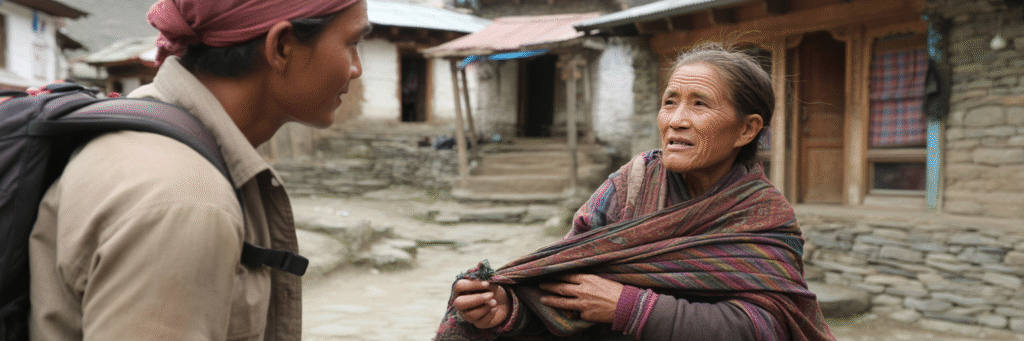
The Himalayas are a fragile ecosystem and home to ancient cultures. As visitors, it is our responsibility to leave them as pristine as we found them. Responsible tourism isn’t a set of rules; it’s a mindset of gratitude and respect for the mountains and their people.
- Leave No Trace Ethics: The simplest principle is ‘pack it in, pack it out’. Carry all your non-biodegradable waste, like plastic wrappers and bottles, back to the city for proper disposal.
- Mindful Cultural Engagement: When passing through villages, dress modestly and always ask for permission before taking photographs of people. Maintain a respectful silence in monasteries and temples.
- Supporting Local Economies: Hire local guides and porters, choose homestays for an authentic experience, and buy handicrafts directly from artisans. This ensures that the economic benefits of tourism directly support the local communities.
By following these principles, every trekker can help preserve the beauty and culture of the Himalayas for generations to come. For more insights on responsible travel, explore our blog.